
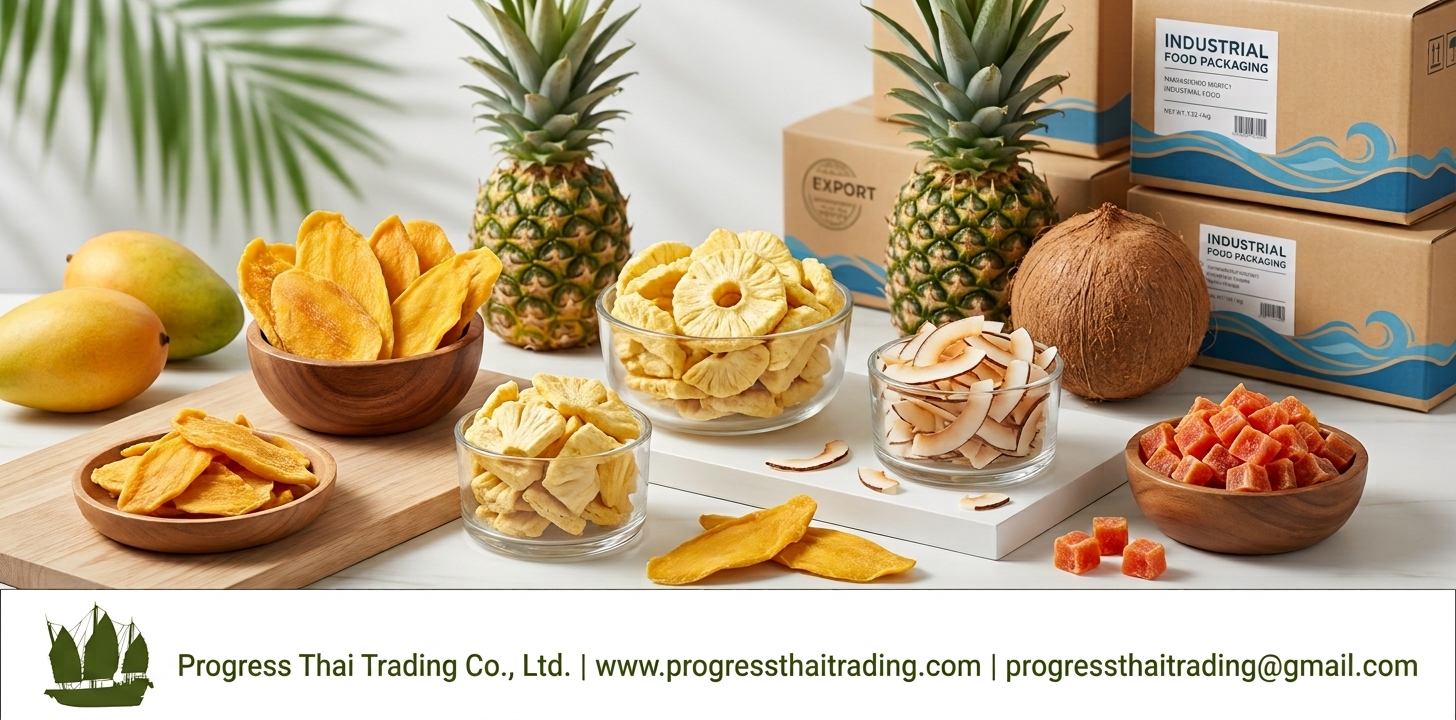
The global healthy snack market is experiencing dynamic, sustained expansion. Modern consumers around the world are actively seeking natural, nutrient-dense alternatives to traditional confectionery and ultra-processed snacks. This shift toward “clean-label” eating has elevated dried fruits from a niche baking ingredient to a primary staple in international retail, food manufacturing, foodservice, and nutraceutical applications.
Thailand has long been recognized as a world leader in tropical agriculture and advanced food preservation. Renowned for its abundant harvest of premium fruits—such as Nam Dok Mai mangoes, sweet Pattavia pineapples, aromatic coconuts, and rich durians—Thailand combines natural agricultural abundance with modern food dehydration and freeze-drying technology.
For international B2B buyers, sourcing wholesale dried fruits and dehydrated fruit ingredients directly from Thailand offers superior taste profiles, robust supply chain reliability, flexible OEM options, and full international food safety compliance.
The Advantage of Thai Dried Fruits in the Global Market
Thailand’s dried fruit industry benefits from a perfect synergy between traditional harvesting expertise and state-of-the-art processing techniques.
1. Superior Raw Material Quality
The taste, color, and texture of dried fruit depend heavily on the quality of the fresh produce used. Thai fruit is harvested at optimal maturity to capture peak natural sugars, natural aroma, and essential nutrients. Key varieties exported globally include:
- Dehydrated Mango: Celebrated globally for its vivid golden color, chewy texture, and sweet, low-acidity profile.
- Dehydrated & Freeze-Dried Pineapple: Offers a balanced sweet-and-tangy flavor, packed with digestive enzymes like bromelain.
- Dried Papaya & Guava: Popular choices for trail mixes and snack blends due to their vibrant colors and firm bite.
- Freeze-Dried Durian & Mangosteen: Highly prized “superfruit” exports, especially across Asian and North American markets.
- Toasted Coconut Chips: A rapidly growing healthy snack category appreciated for its natural crunch and rich medium-chain triglycerides (MCTs).
2. Advanced Drying & Preservation Technologies
Thai manufacturers utilize diverse, controlled drying methods tailored to specific product specs and target buyer applications:
- Hot-Air Dehydration (Low-Sugar / Soft-Dried): Modern cabinet drying retains moisture content between 14% to 18%, creating a soft, pliable texture while preserving natural fruit flavors without over-crystallizing sugars.
- Freeze-Drying (Lyophilization): Sublimation technology removes water at sub-zero temperatures, retaining up to 97% of the original fruit’s nutritional value, shape, and crisp structure. Ideal for cereals, chocolate coating, and premium snacking.
- Vacuum Drying & Osmotic Dehydration: Tailored techniques used to preserve natural color without reliance on excessive artificial preservatives or sulfur dioxide ($SO_2$).
3. Stringent International Certifications
To serve demanding markets across North America, Europe, East Asia, and the Middle East, leading Thai processing plants operate under world-class quality frameworks:
- GMP (Good Manufacturing Practice) & HACCP
- BRCGS (British Retail Consortium Global Standards) / FSSC 22000
- HALAL Certification (Crucial for Middle Eastern and Southeast Asian markets)
- KOSHER Certification
- USDA / EU Organic Certifications (available for certified organic production lines)
Product Categories & Processing Formats for B2B Importers
Understanding the technical formats of Thai dried fruits helps industrial buyers select the exact specification required for their end products.
1. Soft-Dried Fruits (Low Sugar / No Added Sugar)
Targeted directly at health-conscious consumers and premium snack brands. Soft-dried mango, pineapple, and papaya are processed with minimal sugar addition (or 0% added sugar) to meet strict clean-label standards.
2. Freeze-Dried Tropical Fruits
Freeze-dried fruit cubes, slices, and powders are highly sought after by cereal producers, chocolate manufacturers, bakery chains, and tea blenders due to their extended shelf life, low bulk weight, and immediate rehydration properties.
3. Industrial Dices, Cuts, and Powders
- Fruit Dices (3x3mm, 5x5mm, 8x8mm, 10x10mm): Essential for granola bars, muesli mixes, bakery fillings, and confectionery products.
- Dried Fruit Powders: 100% natural fruit powders used as natural flavorings, colorants, and nutrient boosters in beverage formulations, dairy items, and nutritional supplements.
4. Private Label (OEM/ODM) Solutions
Thai processors provide end-to-end contract manufacturing. Buyers can customize cutting styles, sugar levels, moisture percentages, sulfur levels, and packaging formats ranging from retail-ready pouch bags with zipper seals to shelf-ready display boxes.
Industrial Applications across Global Sectors
| Industry Sector | Recommended Format | Common Applications |
| Retail & Snack Brands | Soft-Dried Strips, Freeze-Dried Snacks, Coconut Chips | Private-label snack pouches, trail mixes, impulse purchase packs |
| Breakfast Cereal & Bakery | Diced Dehydrated Fruits, Freeze-Dried Cubes | Granola mixes, muesli, fruit breads, muffin mixes, energy bars |
| Confectionery & Chocolate | Freeze-Dried Fruit Slices, Fruit Powders | Chocolate-coated fruit bites, fruit jellies, artisanal chocolates |
| Dairy & Ice Cream | Industrial Dices, Concentrated Powders | Fruit-infused yogurts, gelato toppings, specialty ice creams |
| Foodservice & Hospitality | Bulk Dehydrated Slices, Dried Garnishes | Cocktail garnishes, hotel breakfast buffets, airline snack packs |
Logistics, Packaging, and Quality Specifications
Transporting dried fruit globally requires protective packaging to preserve texture, prevent moisture absorption, and maintain a long shelf life (typically 12 to 24 months).
Packaging Formats for Export
- Bulk Export Packaging: Inner food-grade polybags vacuum-sealed inside corrugated master cartons (typically 5 kg, 10 kg, or 20 kg per carton).
- Aseptic / Moisture-Barrier Bags: High-barrier aluminum foil bags designed for freeze-dried products to protect against ambient humidity.
- Retail Packaging: Custom-printed stand-up pouches (Doypack), pillow bags, or plastic jars with nitrogen flushing for extended shelf stability.
Key Export Documentation Provided
Every commercial export order processed through Progress Thai Trading Co., Ltd. includes comprehensive compliance documentation:
- Certificate of Analysis (COA): Detailing moisture content, water activity ($a_w$), microbiological limits, and $SO_2$ levels.
- Phytosanitary Certificate: Issued by the Thai Department of Agriculture.
- Certificate of Origin (Form E, Form D, or General CO): Enabling tariff preferences under global trade agreements.
- Packing List & Commercial Invoice: Fully itemized for rapid customs clearance.
Partner with Progress Thai Trading Co., Ltd.
Navigating overseas sourcing, ensuring factory compliance, and managing global shipping can be complex. At Progress Thai Trading Co., Ltd., we serve as your trusted on-the-ground procurement partner in Thailand. We bridge international buyers with fully audited, certified Thai processing facilities, guaranteeing competitive wholesale pricing, consistent physical quality, and seamless logistics execution.
Whether you require custom diced sizes for industrial production, low-sulfur dehydrated mangoes, or turnkey private label snack solutions, our experienced trade team is ready to deliver.
Contact Progress Thai Trading Co., Ltd. today to request detailed product specifications, custom quotes, or commercial samples:
- Website: www.progressthaitrading.com
- Email: progressthaitrading@gmail.com
- Services: Bulk Agricultural Export, OEM/ODM Private Labeling, Quality Inspection, Global Logistics Management